
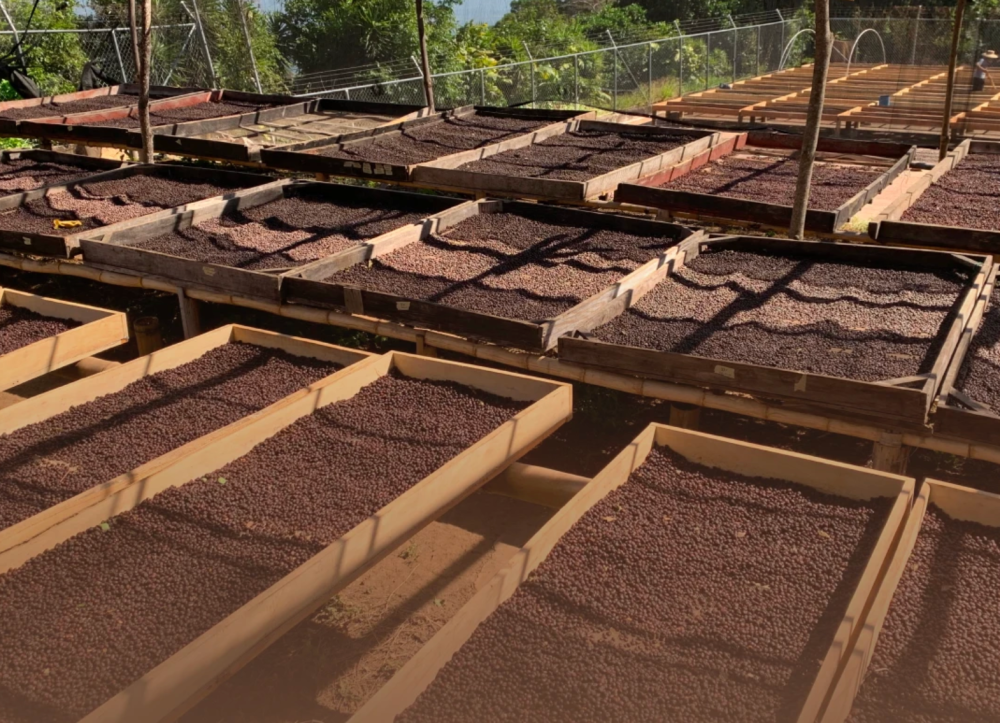
In the world of specialty coffee, nothing is left to chance, even the way coffee beans are dried after harvest has become an area for creativity and experimentation.
One method that has made a strong comeback in recent years is the natural or sun-dried process , which is one of the oldest coffee processing methods in history—but today it is being reformulated according to strict scientific standards.
In this method, coffee beans are dried inside their whole fruit under direct sunlight, without removing the outer shell. The process lasts from 15 to 30 days, during which the fruit is turned periodically to distribute heat and prevent rot.
The result? A rich coffee with a deep, fruity character, a sweetness reminiscent of figs, mangoes, or honey, and a velvety, mouth-filling texture.
What's exciting about modern versions of this method is their use of controlled drying . Modern farms don't rely solely on the sun; they also use precise temperature and humidity sensors, and sometimes hybrid drying chambers that combine natural air and automated control.
Experiments are also being conducted on modifying the rate of fermentation within the rind — known as “microbial control” — to bring out specific flavors by managing the types of yeasts and beneficial bacteria.
In international coffee competitions, natural coffees from Yemen, Ethiopia, Brazil, and Panama now hold top honors thanks to this balance of sweetness and depth.
It's a return to the past, but with eyes on the future—where heritage meets science to create an unforgettable cup.