
When Italian Angelo Moriondo invented the first pressurized coffee maker in 1884, he had no idea he was sparking a revolution that would redefine our relationship with coffee.
Today, espresso is the foundation upon which all modern coffee drinks are built — from lattes to cappuccinos to iced coffee.
But the essence of espresso is not just a “quick brew” method, but a delicate art that relies on pressure, time, and extraction .
Every perfect cup of espresso is the result of a complex equation: 9 bars of pressure, 25 seconds of extraction, and a precise dose of between 18 and 20 grams of coffee ground to near-nano-fineness.
Any slight imbalance — in the grind, distribution, or water temperature — can completely upset the taste.
Today, the world is witnessing tremendous development in this field, thanks to smart espresso machines that measure pressure, flow, and temperature in real time, and automatically adjust themselves to achieve the perfect consistency.
Models like the La Marzocco KB90 and Decent Espresso DE1 allow baristas to control the “pressure curve” itself, experimenting with new flavors that weren’t possible before.
Even at home, appliances like the Breville Oracle Touch and Dalla Corte Mina now offer users a near-professional experience.
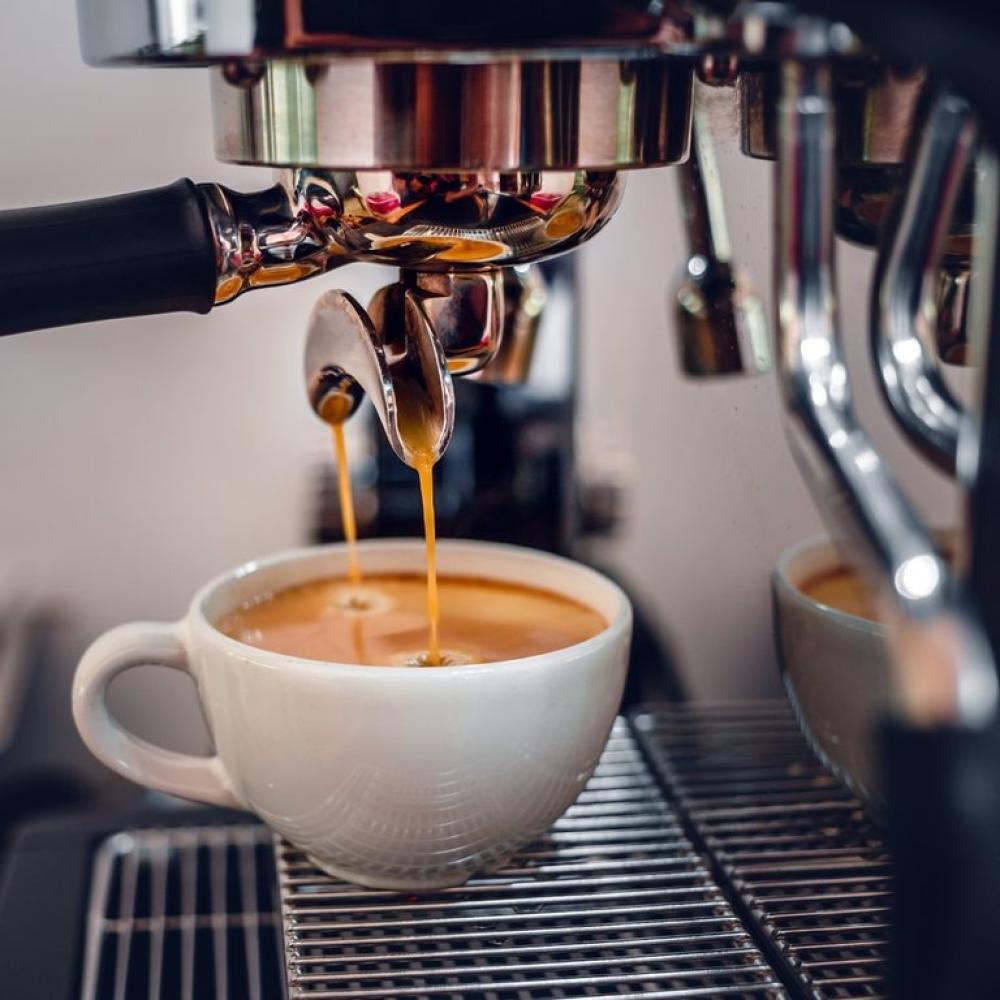
However, the magic of espresso remains in that moment when you see the golden crema forming and smell the caramel, hazelnut and honey in the air.
Espresso is not just a strong drink…
It is a language of harmony between science and sense, precision and passion .
For this reason, the espresso machine will remain an enduring icon in every corner of specialty coffee culture.