
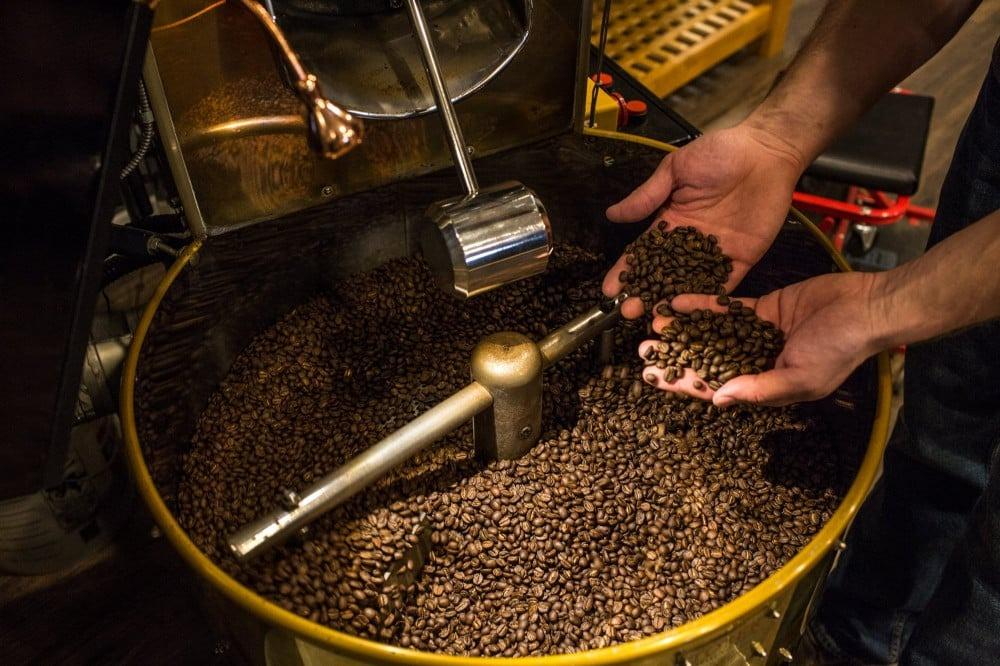
When we talk about specialty coffee, the first thing that comes to mind is roasting , that magical stage that transforms green coffee beans into a source of aroma, flavor, and balance.
But today, the world is witnessing a clear shift towards light roasting , which has become a new language through which roasters express the identity of farms and regions of origin.
Light roasting doesn't mean the coffee is underdone, it's a celebration of the bean's natural essence .
In this type of roasting, relatively low temperatures are maintained, usually between 195 and 205 degrees Celsius , and roasting is terminated just after the “first pop,” before the deep caramelization process begins.
The result? Bright fruity flavors, sparkling acidity, and stunning aromatic complexity reminiscent of fine wines or natural juices.
What makes light roasting unique is that it reflects the farmer's signature, climate, elevation and soil , more than any other type.
Yemeni coffee, for example, might have notes of peach, grape, honey, and chocolate, while Ethiopian coffee might have lemon and jasmine notes, while Colombian coffee might have notes of apple and honey. All of this is thanks to the precision of the roasting process, which doesn't overpower the coffee's origins.
Modern roasting techniques rely on digital control programs that track the temperature curve in seconds, allowing the same flavor to be reproduced repeatedly with near-scientific accuracy.
Some roasters have also begun using infrared spectroscopy to monitor the development of sugars and acids during roasting, a fascinating blend of art and science.
Light roasting today is not just a fad, but a new philosophy for specialty coffee — putting the farmer first, and transparency of flavor as a top value.